
August 15, 2020 — Sonoma Coast, California
Detail of a breaking wave. It’s cold, not hot. Photographer was ever virgilent.
(Nikon D500, Tamron 100–400mm f/4.5–6.3 Di VC USD. RAW processing in DxO PhotoLab 3.3; Editing in Adobe Photoshop.)
August 15, 2020 — Sonoma Coast, California
Detail of a breaking wave. It’s cold, not hot. Photographer was ever virgilent.
(Nikon D500, Tamron 100–400mm f/4.5–6.3 Di VC USD. RAW processing in DxO PhotoLab 3.3; Editing in Adobe Photoshop.)
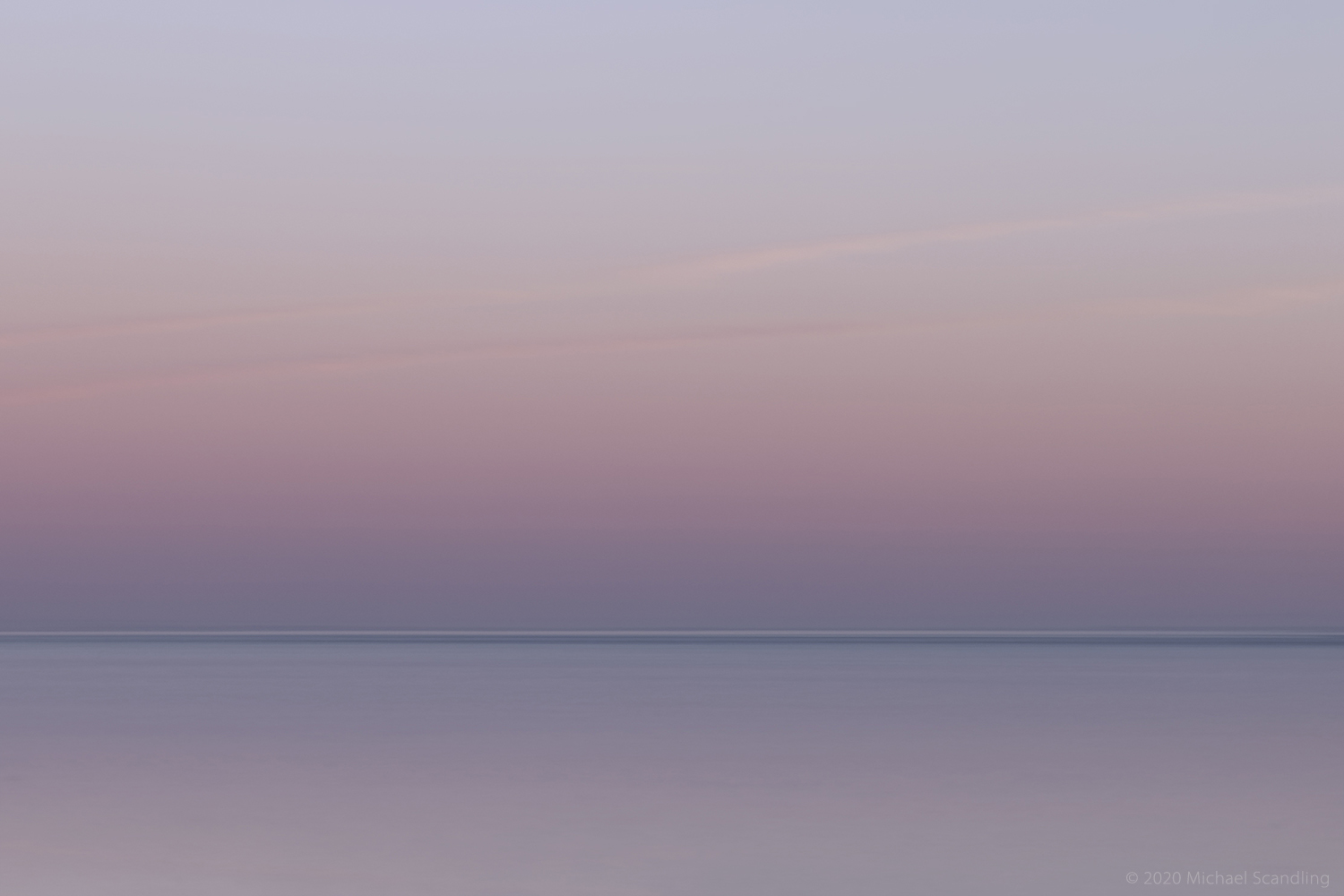
August 14, 2020 — Sonoma County Coast, California
More or less what happened in the fading anticrepuscular light. Almost. Sort of.
(Nikon D850, Nikon 24-120mm f/4G VR. ISO 64, f/13, 75 sec. 10-stop neutral density filter. RAW processing and initial editing in DxO PhotoLab 3.3; Final editing in Adobe Photoshop.)

August 12, 2020 — Marin County Coast, California
It’s easier to have one’s head in the clouds if the clouds are at or only slightly above sea level. The California coast is famous for sea-level clouds in the summer. We locals call it fog.
(Nikon D850, Nikon 24-120mm f/4G VR. RAW processing and initial editing in DxO PhotoLab 3.3; Final editing in Adobe Photoshop.)

August 4, 2020 — Berkeley, California
Exploring new realms of minimalism in Intentional Camera Motion.
(Nikon D500 Tamron 100–400mm f/4.5–6.3 Di VC USD. RAW processing in DxO PhotoLab 3.3; Editing in Adobe Photoshop.)
Note: If you are seeing this in an email, please click on the blog title in the body of the email. Your web browser will take you to the actual blog where pictures always look much better.
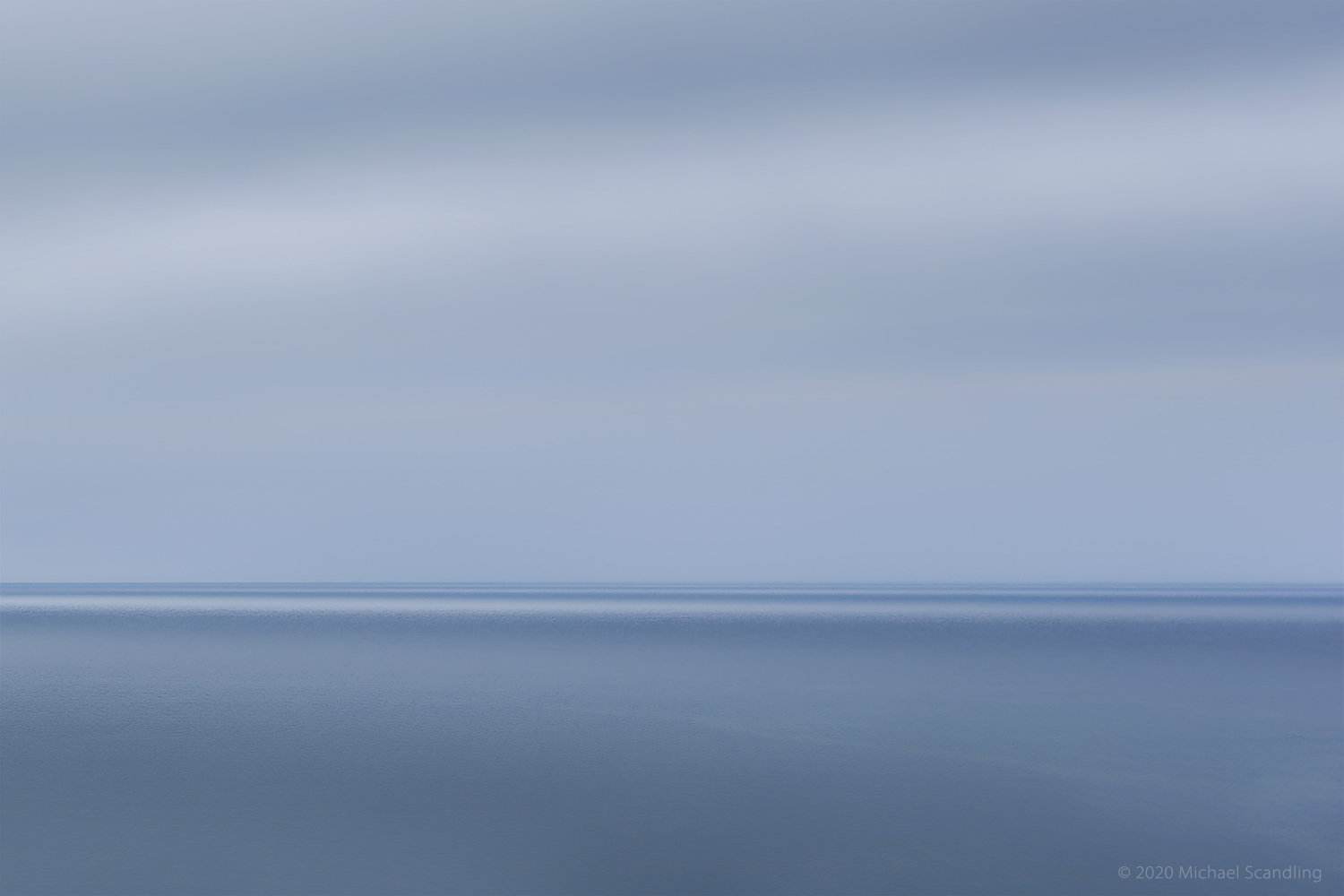
December 6, 2013. Sonoma County, California.
This shot had been and also-ran from a shoot that has produced a couple of other pictures that I’ve posted here. It just seemed that it was too much like another one that got a lot of attention. But, as has been happening fairly frequently, I saw it with different eyes last night. This is a distillation.
As with my last post, tonal balance was a challenge, but I believe all the pixels ended up happy.
(Sony RX-100. RAW processing and initial editing in DxO PhotoLab 3.3; Final editing in Adobe Photoshop.)
Note: If you are seeing this in an email, please click on the blog title in the body of the email. Your web browser will take you to the actual blog where the picture will look much better.
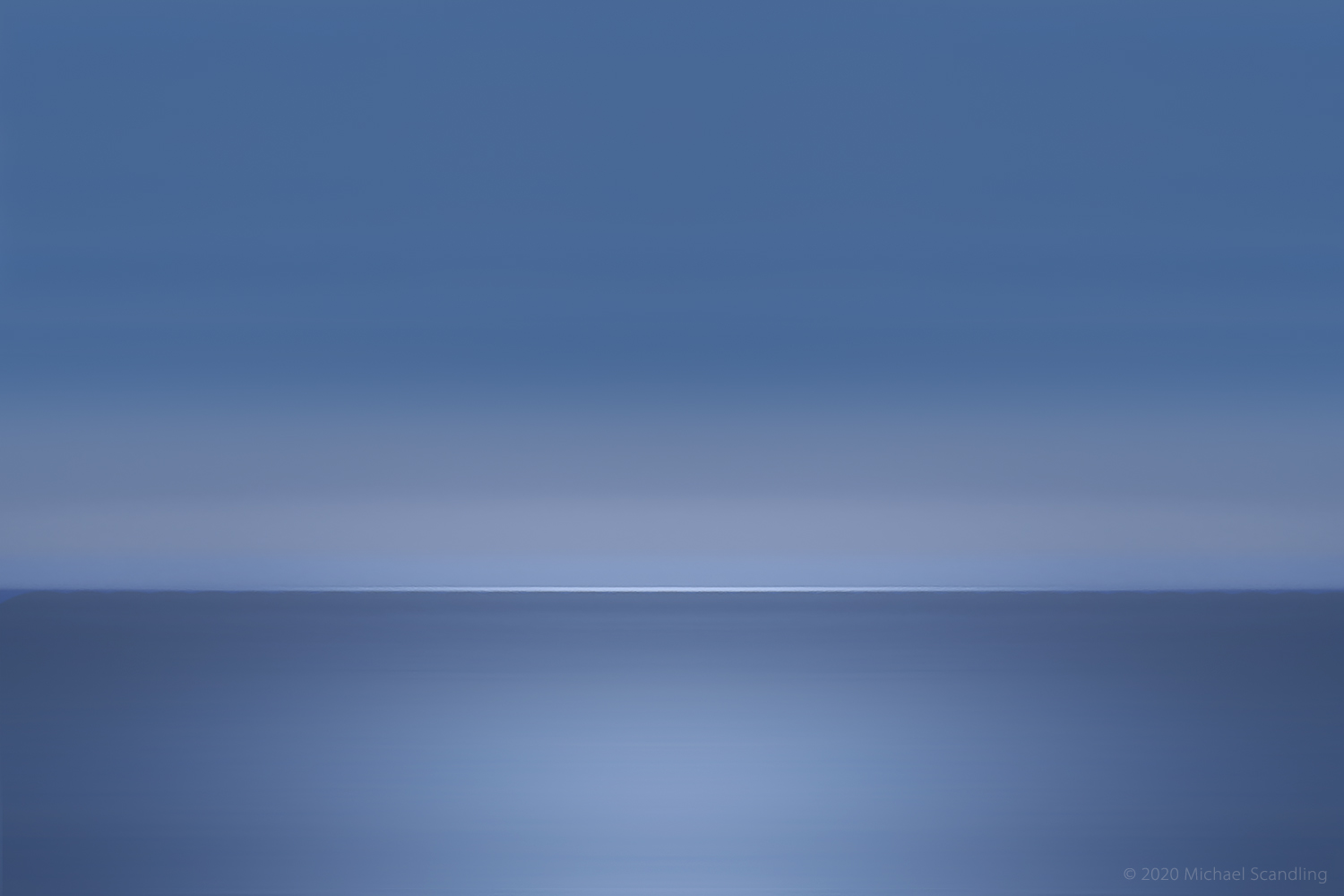
July 10, 2010. San Gregorio Bluffs, San Mateo County, California — and last night in my office.
This is an impossibly small crop of a much larger frame — a starting point for an imaginary stroll on walkable water.
I was going to post this last night, but it wasn’t ready. This is a picture where every nuance counts. An adjustment of just one click plus or minus in vibrancy or color balance or layer blending made a visible difference. Everything is poised on the head of a pin. Had to sleep on it. Glad I did. A few changes in the morning finally resulted in a smile for both me and the Muse.
(Canon G5X II. RAW processing and initial editing in DxO PhotoLab 3.3; Final editing in Adobe Photoshop.)
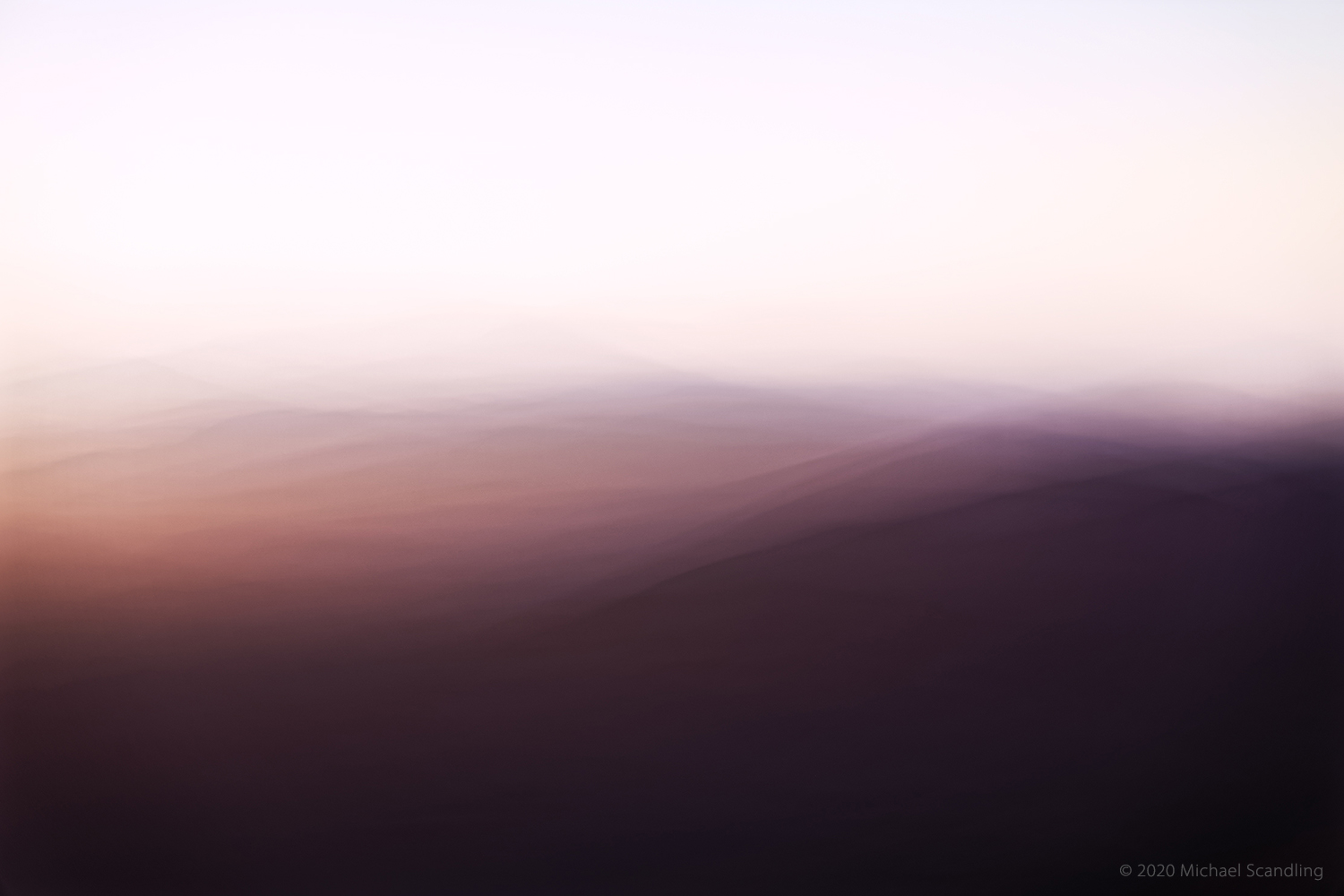
July 12, 2020 — Marin County Headlands, California
I did a lot of ICM pans while waiting for the comet NEOWISE to appear over Mount Tamalpais on July 12. The RAW file of this shot had been sitting in archives since then, several times passed over as an also-ran. Today I saw it with new eyes. It had potential.
Every single element took part in the slow pixel dance, changing color, tone, and contrast relationships with their partners many times over. Eventually each one found its place. While I was working, the computer’s fan turned on every now and then, sounding like a gentle breeze blowing through the native grass and coastal scrub.
While yesterday’s picture was a very small crop of its original frame and was ready after about a half hour of processing, this one is the full frame with no crop other than about one degree of straightening — and about two and a half or three hours of processing until we all agreed this was no longer a loosely organized bunch of pixels, but truly a picture.
It proofs nicely at 20 by 30 inches (51 x 76 cm) and can grow to more than twice that size with no ill effect
(Nikon D850, Nikon 24-120mm f/4G VR. ISO 64, 6 seconds at f/4. 10-stop neutral density filter. RAW processing and initial editing in DxO PhotoLab 3.3; Final editing in Adobe Photoshop.)

June 26, 2020 —From the Side of Mt.Tamalpais, Above Stinson Beach, California
ICM impression of a fog bank coming in on the beach.
I was thinking, after the past few days a little more color might be nice. Just a little.
(Nikon D850, Nikon 24-120mm f/4G VR. RAW processing in DxO PhotoLab 3.3; Editing in Adobe Photoshop.)
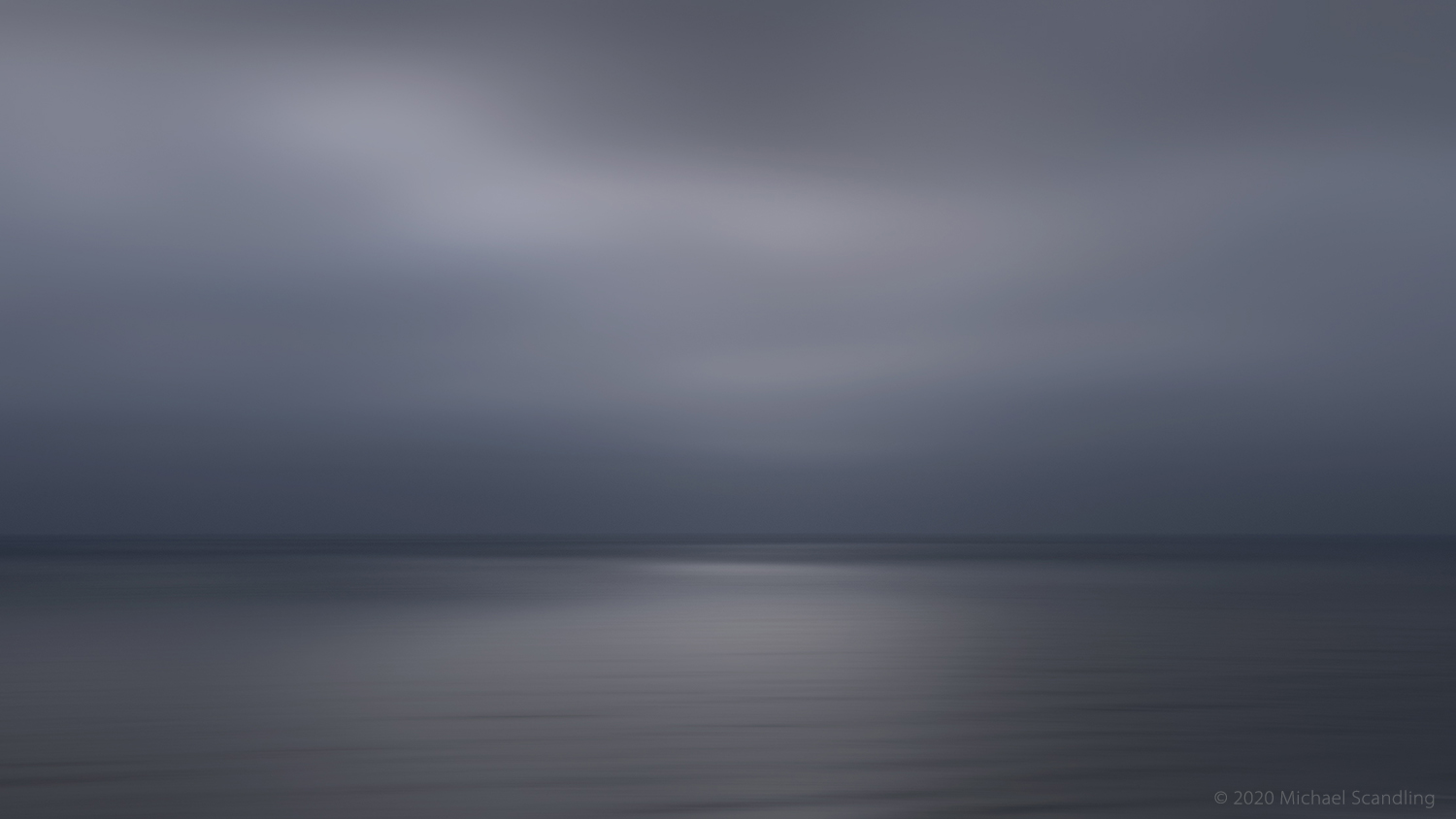
July 25, 2020 — San Gregorio Bluffs, San Mateo County, California.
What light through yonder fog bank glows?
A different take on my trip to San Gregorio.
(Back to reality. Sort of.)
(Nikon D850, Tamron SP 24–70mm f/2.8 Di VC USD G2. RAW processing in DxO PhotoLab 3.3; Editing in Adobe Photoshop.)
Note to email subscribers: To get a far better look at the picture, open the email and then click on the title of the blog and you’ll be taken to the actual blog website. It’s always a much more satisfying view when you do this.

July 27, 2020 — San Francisco Bay Area, California
Arches are inclusive. Arches form bridges, not walls. Even the most delicate arch can form the strongest structure.
(Nikon D850, Nikon 24-120mm f/4G VR. RAW processing in DxO PhotoLab 3.3; Editing in Adobe Photoshop.)
Note to email subscribers: To get a far better look at the picture, click on the title of the blog and you’ll be taken to the actual blog website. It’s always a much more satisfying view when you do this.

July 27, 2020 — San Francisco Bay Area, California
ICM experiment. ISO 64, 1.3 sec at f/9. But what is it?
(Nikon D850, Nikon 24-120mm f/4G VR. RAW processing in DxO PhotoLab 3.3; Editing in Adobe Photoshop.)
If you subscribe by email, please click on the blog title after you open the email. You’ll be taken to the actual blog, where the photo reproduction is much better than in the email. It’s always better to do this.

July 25, 2020 — San Gregorio Bluffs, San Mateo County, California.
Gertrude said, “There’s no there there.”
Sometimes the less “there” there is, the more “there there” there is.
There, I’ve said it.
Gertrude was obviously thinking of somewhere else.
(Nikon D850, Tamron SP 24–70mm f/2.8 Di VC USD G2. RAW processing in DxO PhotoLab 3.3; Editing in Adobe Photoshop.)
Note to email subscribers: To get a far better look at the picture, click on the title of the blog and you’ll be taken to the actual blog website. It’s always a much more satisfying view.

July 13, 2018. San Gregorio Bluffs, San Mateo County, California.
The bluffs over San Gregorio Beach are a favorite spot for me. They provide a high enough vantage point for me to see far out to sea with an oblique perspective for light play on the surface, and they get me far enough above the water to prevent having too much detail on the water. Sometimes detail is a distraction.
I’ve long been drawn to horizons. Horizontal lines tend to be soothing; vertical lines are jarring. I go for soothing. The horizon, reassuringly lateral and far away helps create a feeling of stability and space. And it’s good to have a feeling of stability and space. Especially in today’s world.
And especially when it’s a dark and moody early evening.
(Canon G7X II. RAW processing in DxO PhotoLab 2.3; Editing in Adobe Photoshop.)

July 21, 2020 — Lake Hennessey, California
Fog all over the Bay Area. Not a star in sight. No hope at all for a comet. We went in search of clear skies further inland and eventually wound up on the shore of Lake Hennessey, which we’d never heard of. A pleasant 62 degrees, clear skies, late-night fishermen, and a hilly horizon. Here’s our catch: Two meteors, the Big Dipper, a whole bunch of stars, a satellite track — and oh yes, the comet with a tiny bit of ion tail visible. All in this one shot.
(Nikon D850, Tamron SP 24–70mm f/2.8 Di VC USD G2. RAW processing in DxO PhotoLab 3.3; Editing in Adobe Photoshop.)
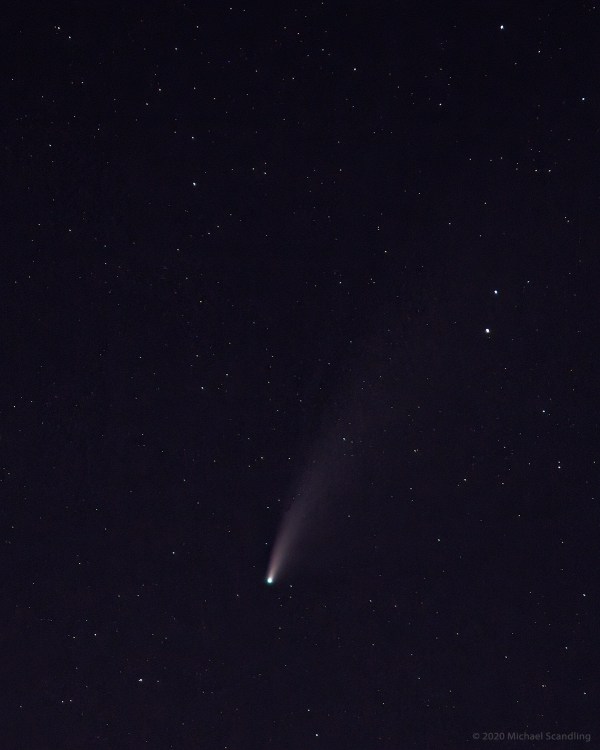
July 19, 2020 — Richmond, California
No dramatic foreground. Mostly a practice shot. Conditions: Not so good. Hazy sky. Thin high clouds. Still, the tiniest wisp of the ion tail shows on my monitor, if not here. Seeking a clear dark sky. San Francisco Bay Area in July doesn’t like to produce such a thing. Tomorrow’s weather forecast looks a little better, however.
(Nikon D500, Tamron SP 24–70mm f/2.8 Di VC USD G2. ISO 800, f/2.8, 3 sec. RAW processing in DxO PhotoLab 3.3; Noise reduction in Topaz DeNoise AI. Editing in Adobe Photoshop.)
 AMAGA Photography Blog