
July 12, 2020 — Marin County, California
More playing around with ICM while waiting for NEOWISE to appear. And playing around with editing.
(Nikon D850, Nikon 24-120mm f/4G VR. RAW processing in DxO PhotoLab 3.3; Editing in Adobe Photoshop.)
July 12, 2020 — Marin County, California
More playing around with ICM while waiting for NEOWISE to appear. And playing around with editing.
(Nikon D850, Nikon 24-120mm f/4G VR. RAW processing in DxO PhotoLab 3.3; Editing in Adobe Photoshop.)
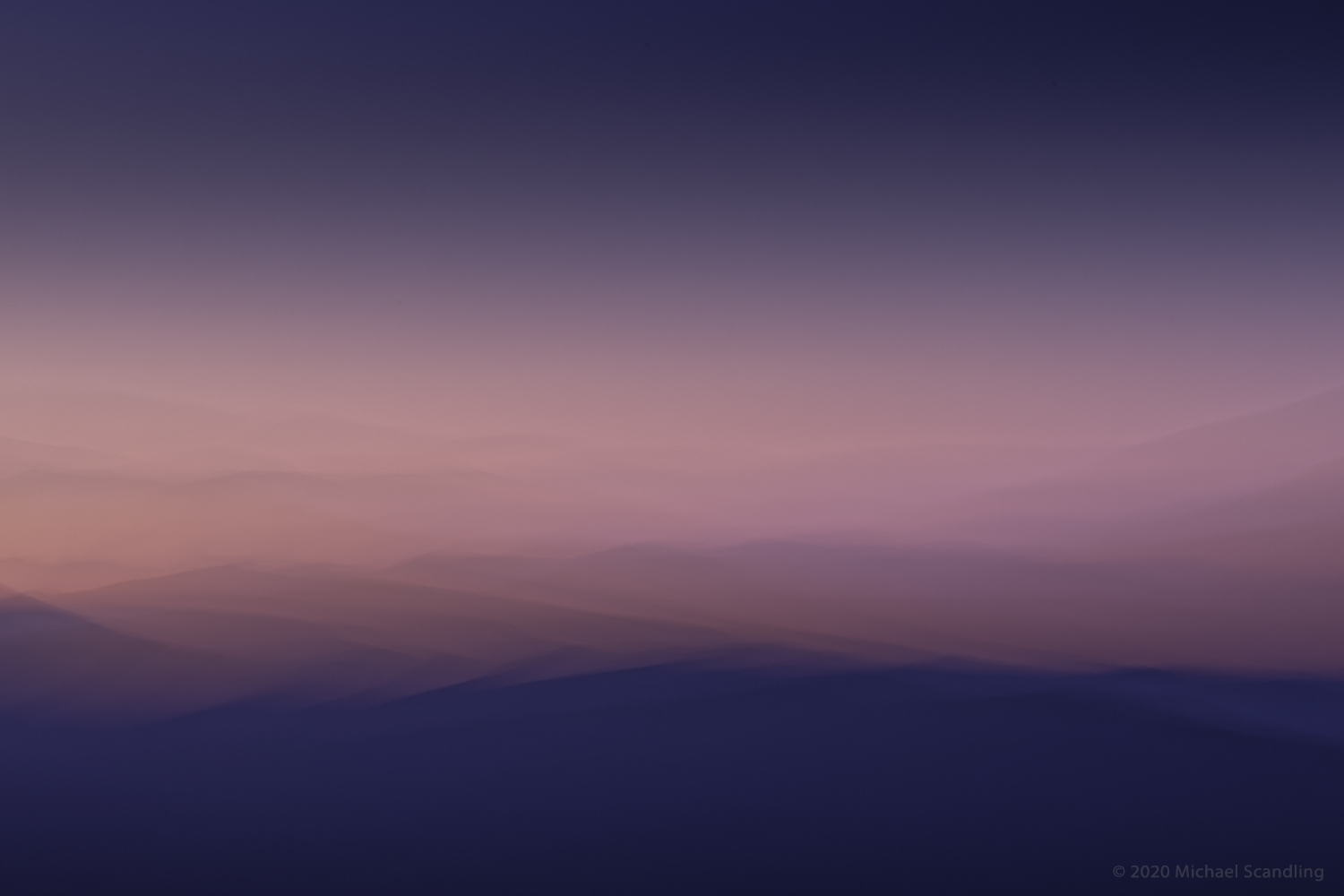
July 12, 2020 — Marin County, California
Or, playing around with ICM while waiting for NEOWISE to appear.
(Nikon D850, Nikon 24-120mm f/4G VR. RAW processing in DxO PhotoLab 3.3; Editing in Adobe Photoshop.)

July 14, 2020, 9:49 p.m. — San Mateo County, California
My second shot at it. Not bad. I’m glad it will be around a bit longer.
(Nikon D850, Tamron SP 24–70mm f/2.8 Di VC USD G2. RAW processing in DxO PhotoLab 3.2; Editing in Adobe Photoshop.)

July 10, 2010. San Gregorio Bluffs, San Mateo County, California.
On my way from Silicon Valley to San Francisco, I decided on the spur of the moment to take the scenic route. Web Cam showed some coastal clouds and I was hoping to get a sun-dappled sea. All I had with me was trusty MiniCam™ — my Canon G5X II. (The best camera is the one you have with you, so have something decent with you. That’s my motto.)
Clouds were insufficient for dappling, but the sea was pretty flat. Shimmering. Nice for Intentional Camera Motion.
The G5X II is very good for its size, but it does have its limitations. It has a built-in three-stop neutral density filter, which is nice but about three stops short of what I needed for ICM. Best shutter speed I could get without unrecoverable overexposure was 1/30. I had to twist fast to get any blur at all, so this is subtle ICM. (It’s also good exercise.)
Off the camera and on the box, the sky above was a mismatch for the streaky sliver below. Squinting at the monitor, the Muse thought the clouds should be softer to play quiet harmony with the sea. She was right.
(Canon G5X II. RAW processing in DxO PhotoLab 3.2; Editing in Adobe Photoshop.)

Dec 7, 2018. Chimney Rock Trail, Point Reyes National Seashore, California.
The cliffs over Drakes Bay stand perfectly still. They can be a moving experience.
(Nikon D850; Tamron 24-70 f/2.8 DI VC USD Zoom. RAW processing in DxO PhotoLab 2.3; Editing in Adobe Photoshop.)

Dec 24, 2018. Sonoma County Coast, California.
Hidden in the Archives, waiting to be coaxed into being. Took some coaxing, but I believe the pixels are happy. (This is exactly what I said in the June 8, 2020 post. This shot was taken 54 seconds later. The technical info is corrected here, though.)
(Nikon D850; Tamron 24-70 f/2.8 DI VC USD Zoom. RAW processing in DxO PhotoLab 3.3; Editing in Adobe Photoshop.)

June 26, 2020 —Side of Mt.Tamalpais, Above Stinson Beach, Marin County, California
ICM impression of an incoming fog bank.
Years ago, someone — who was so much younger then — wondered what it was like to be inside a cloud. Years before that, another person — who was sooo much younger then — wondered what it was like to be inside the rings of Saturn.
In both cases, wondering was more fun.
A reminder that thinking young and growing older is no sin…
(Nikon D850, Nikon 24-120mm f/4G VR. RAW processing in DxO PhotoLab 3.3; Editing in Adobe Photoshop.)

June 26, 2020 —Above Stinson Beach, California
On a bluff a hundred feet above a very calm Pacific. The summer fog was advancing. Fifteen minutes later there was nothing to see; the ocean was but a distant sound.
(Nikon D850, Nikon 24-120mm f/4G VR. RAW processing in DxO PhotoLab 3.3; Editing in Adobe Photoshop.)

June 26, 2020 — Mt. Tamalpais, Above Stinson Beach, California
More ICM. Less abstract, more impressionist, than a lot of what I do. Still under the thrall of the nineteenth century.
(Nikon D850, Nikon 24-120mm f/4G VR. RAW processing in DxO PhotoLab 3.3; Editing in Adobe Photoshop.)
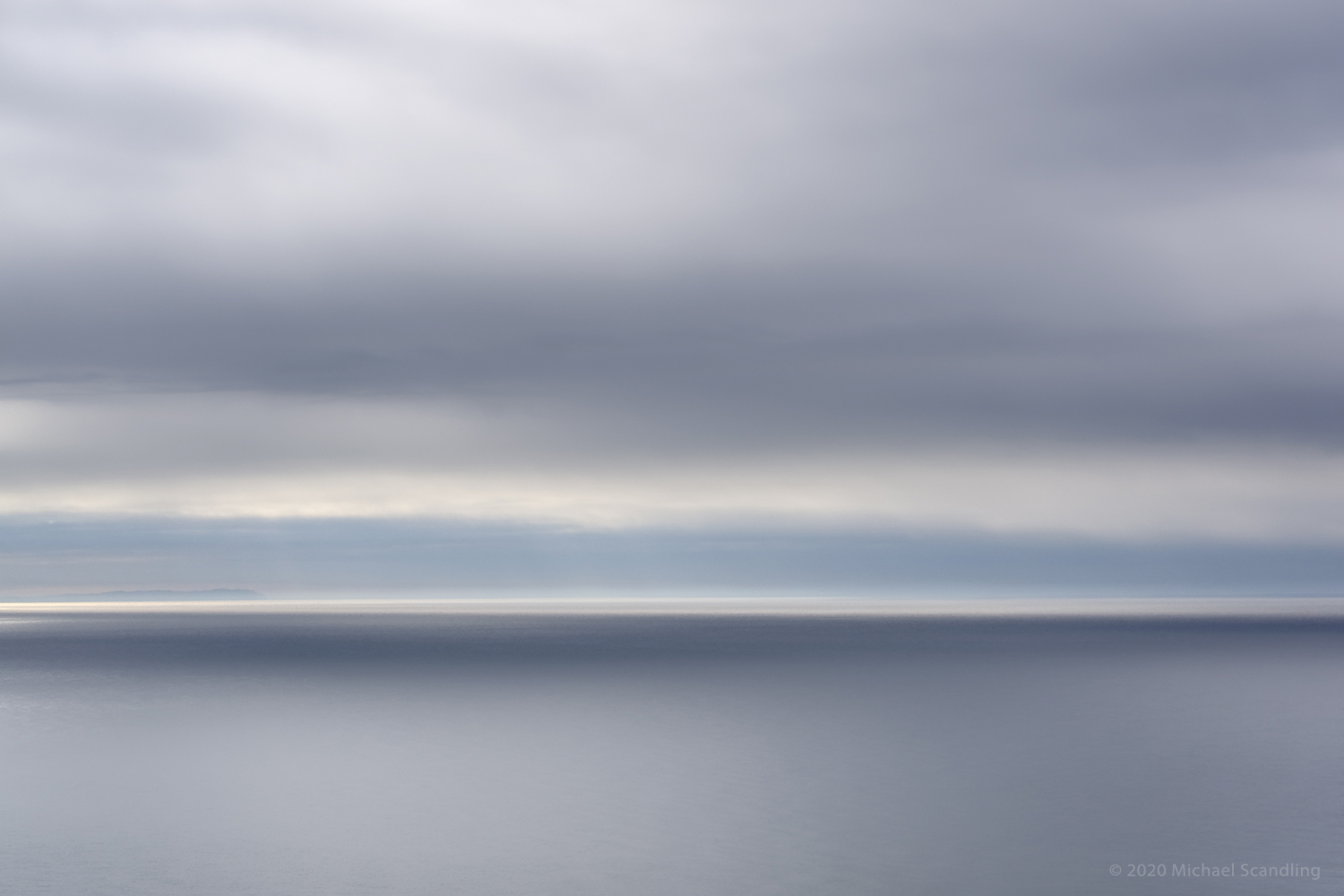
Jan 18, 2012 — Sonoma County Coast, California
An old favorite reimagined. If you look, you’ll see Point Reyes way off in the distance. The sky is creamy.
The best camera is the one you have with you. The Canon S95 was one of the first pocket cameras to have a larger sensor, allow full adjustments including Manual, and to provide RAW files. The RAW files were only 8-bit, which didn’t allow much flexibility in editing — but it was far better situation than jpg only.
(Canon PowerShot S95. RAW processing in DxO PhotoLab 3.3; Editing in Adobe Photoshop.)

June 19, 2020 — Point Reyes National Seashore, California
Frozen not by temperature, but by time.
(Nikon D500, Tamron 100–400mm f/4.5–6.3 Di VC USD. RAW processing in DxO PhotoLab 3.3; Editing in Adobe Photoshop.)

June 19, 2020 — Point Reyes National Seashore, California
. . .Had Turner been on the beach at Point Reyes with a camera. Which, of course, he wasn’t.
This is an experiment in ICM — Intentional Camera Motion. As one might expect, the subject was moving as well, as waves are wont to do.
(Nikon D850, Nikon 24-120mm f/4G VR. RAW processing in DxO PhotoLab 3.3; Editing in Adobe Photoshop.)

June 19, 2020 — Point Reyes National Seashore, California
The summer ocean is not as rambunctious as the winter ocean. But when you get close, interesting things happen.
(Nikon D500, Tamron 100–400mm f/4.5–6.3 Di VC USD. RAW processing in DxO PhotoLab 3.3; Editing in Adobe Photoshop.)

July 14, 2011, San Jose Blues Festival, San Jose, California.
Here’s a secret: I really enjoy doing performance photography. But it’s not a concentration: I’ve only posted performance photography twice before. The first was in my fourth blog post ever, on November 30, 2018.
Today, for reasons that might already be obvious, I’ve decided to post another.
This is Ruthie Foster. She grew up with music in her genes and in her early teens she knew that her life would revolve around music. She had a definite idea of exactly how that would be: early in her career she turned down an opportunity to be promoted as a pop star by a major record label, preferring to stick to roots music and blues. Many albums and awards later (including three Grammy nominations) she has stuck to her dream and is living it to the max. She is a person of huge talent and integrity.
This picture catches her in the act of doing what she like to do best and reflects the pure joy of being alive. As I write this, I’m listening to her latest album.
Ruthie Foster was born, raised, and still lives in Texas. And in that state, one hundred and fifty-five years ago today — June 19, 1865 — the last Texas slaves (thus the last slaves in the United States) were declared free. The anniversary was originally celebrated as Jubilee Day. Now it is celebrated as Juneteenth.
Recent events have made us more aware of this anniversary than ever.
Recent events of unimaginable insanity (unimaginable except for the fact that we’ve seen the videos) have plunged this country and society into a day of reckoning. Things must change.
Our so-called leaders have proven that they can’t be relied on to make meaningful change as they continue asserting their own peculiar versions of what they think is “right.” While those who cannot lead but only brag hold their feckless rallies — the latest making a mockery of Juneteenth and the massacre in Tulsa ninety-nine years ago — it falls on us as individuals and families and communities to make the change.
The first step in solving any problem is simply facing it and seeing it as it is. I say “simply” as if it’s easy. In fact, it may be the hardest part of the whole process.
My own viewpoint is that a person’s body is a wrapper for the essential spiritual being who drives it. We’ve all had the experience at gift-giving time of discovering that sometimes the most modestly wrapped package contained the most miraculous gift while the most impressively wrapped package contained something trivial. Predicting or judging the contents by the appearance of the wrapper is at best misleading. It’s a false criterion. At worst it is actively destructive of life.
Is a gift better or worse because the paper is red or green or black or white? Really? But way too many think and act that way.
So why do I, when walking down the street, sometimes feel a twinge of fear when I see a wrapper of a given description? Why? One way or another I’ve been carefully taught. And while I’ve been working hard to shed myself of that particular education and I’ve made major headway, I need to work harder.*
Those who cannot lead can only make empty brags. In their spiritual weakness they bury their heads in the sand. We can do better.
Those of us who are alive and can actually see can work on ourselves and our families and closer communities — because that’s the only way we will get true, lasting change anyway. It starts with each of us.
So let’s take a lesson from Ruthie. It’s pretty obvious to me that she celebrates her wrapper and that the essential gift inside shines ever so brightly.
Let’s follow her lead.
(Canon 7D; Canon EF 70-300 f/4.5-5.6 DO IS USM Zoom. RAW processing in DxO PhotoLab 3.3; Editing in Adobe Photoshop.)
* I’m not one to think in extremes and consider that if I’m not perfect I’m worthless. We’re all works in progress and as long as we recognize that fact and keep working on improving as individuals and members of society, we’re on the right track.
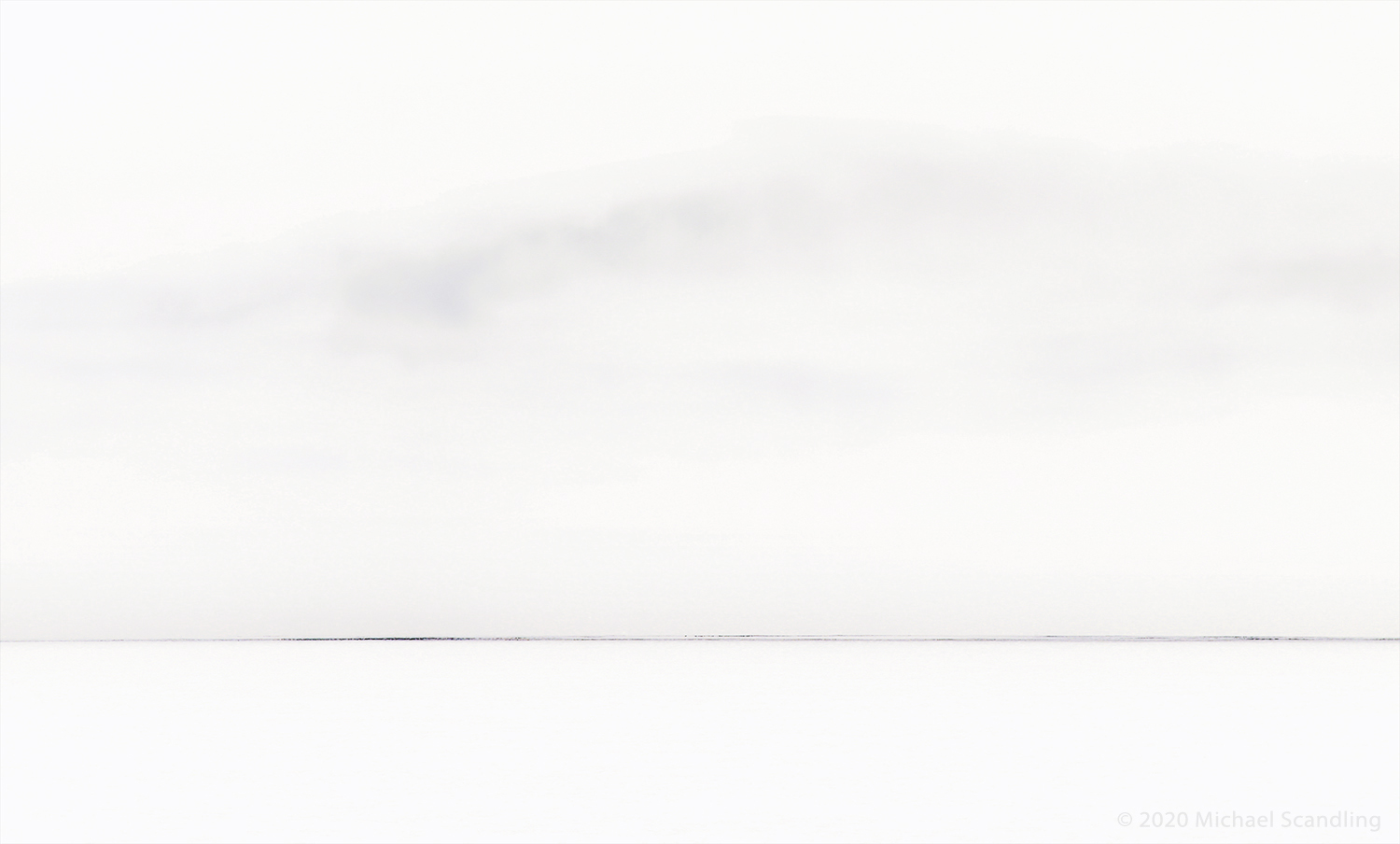
August 13, 2006, Big Sur Coast, California / June 17, 2020, Silicon Valley, California
Several months ago, Bruce Percy inverted some of his images to create, essentially, photo negatives. It worked rather well.
I thought I’d try it.
(Canon 20D, Canon 24-105 f/4 Zoom. Editing in Adobe Photoshop.)
 AMAGA Photography Blog